CASA KIKU MYKONOS | THOUGHTS
Location at its best.
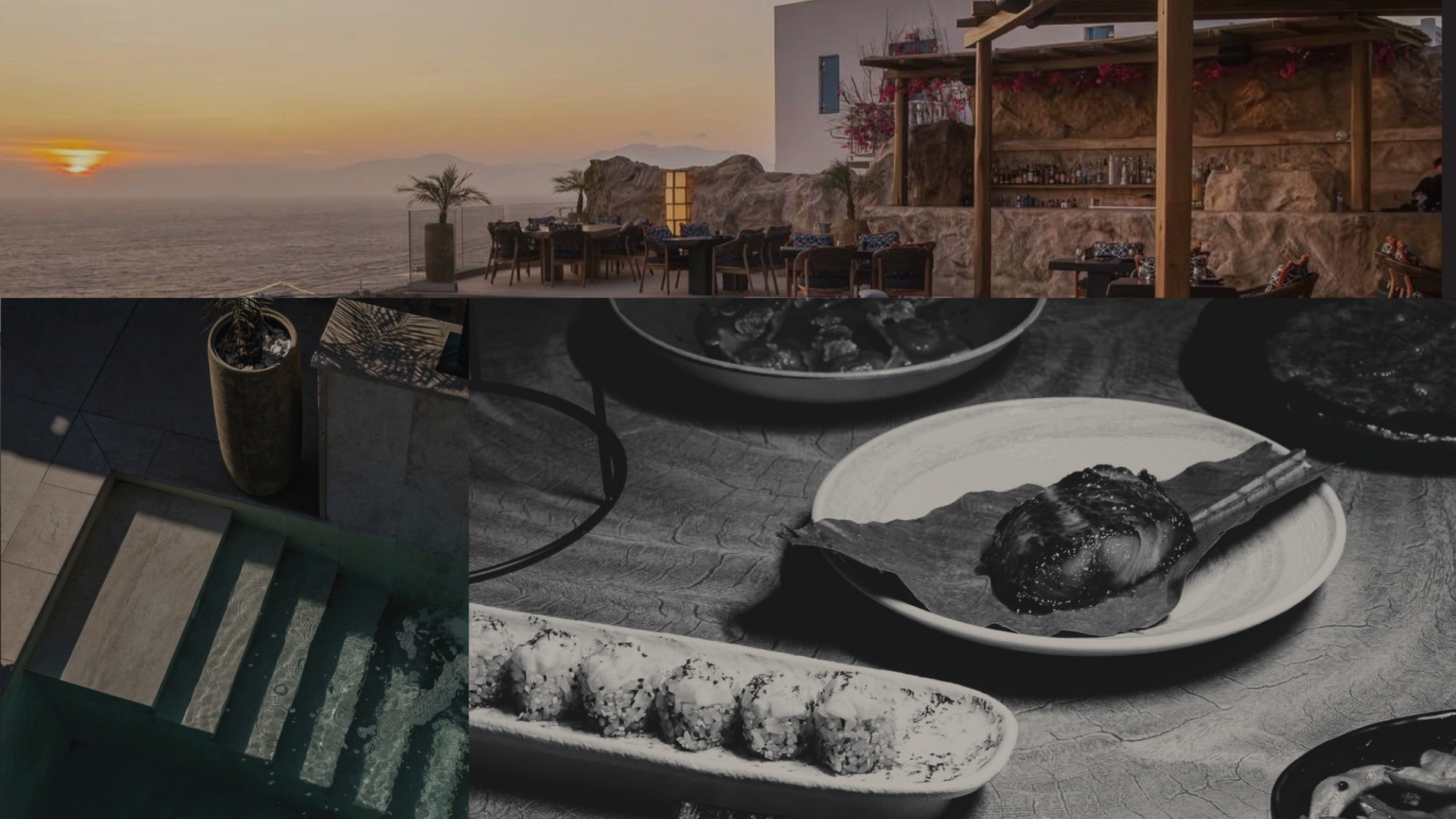
At a certain point along the contours of Mykonos the island begins to reveal a different language. Not the language of arrival or spectacle but of subtle transition where land sea and light start to behave like elements in conversation rather than separate features. It is within this threshold that Casa Kiku Mykonos finds its place.
The location is not defined by proximity or distance but by rhythm. It exists in a carefully chosen pocket of the island where energy is present yet controlled where visibility exists without intrusion where the sense of being connected to Mykonos is balanced by the privilege of separation from it.
Here silence is not absence. It is design. It is the space between sound where the wind carries texture rather than noise and where the horizon feels closer than it should yet never overwhelming. The land itself feels intentional as if shaped not only by geography but by atmosphere.
Morning begins with a clarity that is almost architectural. Light arrives in measured progression revealing stone textures and softened edges. There is no urgency. Everything unfolds slowly as if the island is still deciding whether to fully awaken. From this vantage point the sea is not just a view but a constant presence shifting tone throughout the day like a living surface.
By midday the environment becomes suspended. Heat creates stillness not discomfort. Shadows define space rather than fill it. The location encourages pause without asking for it. Guests are not directed into moments they are absorbed by them. This is where the philosophy of Casa Kiku becomes most evident. The idea that luxury is not addition but reduction. Not noise but clarity.
As afternoon dissolves into evening the transformation is almost imperceptible. The same landscape begins to shift its identity. Colors deepen. Edges soften. The air becomes textured with expectation. The horizon no longer feels distant but present as if the sea itself is leaning closer to listen.
This is where the emotional architecture of the place becomes most visible. The location does not simply frame experience it shapes it. Movement slows. Conversation changes tone. Even stillness feels more deliberate. There is a sense that time is not passing but expanding.
Night introduces a different register entirely. The island does not become dark it becomes dimensional. Light becomes selective. Sound travels differently. The distance between spaces feels both larger and more intimate. From within this environment Casa Kiku exists not as a structure placed on the island but as an extension of it.
The philosophy behind the location is rooted in restraint. Nothing competes with the surroundings. Everything responds to them. Architecture follows terrain rather than imposing upon it. Interiors reflect the palette of the island rather than redefining it. Even atmosphere is treated as material.
What emerges is not a destination in the conventional sense but a condition of being. A place where stillness and energy coexist without conflict where isolation and connection are not opposites but companions.
To understand this location is to understand that nothing here is accidental. Every angle every pause every shift in light contributes to a larger intention. And that intention is simple yet rare.
To exist fully within the moment without distraction.